
Breeder snapshot
David W Weaver – Millersburg, OH is linked to 23 public inspection reports from USDA and Ohio.
Millersburg, Ohio
David W Weaver – Millersburg, OH is linked to 23 public inspection reports from USDA and Ohio.
Inspection Dog Counts
Dogs countedInspection date
David W Weaver – Millersburg, OH is linked to 23 public inspection reports, carrying 20 inspector findings, from April 2018 to May 2025.
Across 12 inspections between April 2018 and February 2025, inspectors recorded between 40 dogs and 112 dogs at David W Weaver – Millersburg, OH. The most recent count was 42 dogs on February 13, 2025.
| Date | Licence | Type | Dogs counted | Inspector findings |
|---|---|---|---|---|
| April 26, 2018 | USDA 31-A-0709 | Pre-license inspection #1 | 76 dogs | None |
| April 1, 2019 | USDA 31-A-0709 | Routine inspection | 112 dogs | 1 finding |
| March 8, 2021 | USDA 31-A-0709 | Attempted inspection | No access | None |
| May 12, 2021 | USDA 31-A-0709 | Routine inspection | 86 dogs | None |
| April 5, 2023 | USDA 31-A-0709 | Re-license inspection | 85 dogs | 6 findings |
| April 12, 2023 | USDA 31-A-0709 | Re-license inspection | 88 dogs | None |
| May 23, 2023 | USDA 31-A-0709 | Attempted inspection | No access | None |
| June 8, 2023 | USDA 31-A-0709 | Attempted inspection | No access | None |
| July 6, 2023 | USDA 31-A-0709 | Routine inspection | 64 dogs | 5 findings |
| July 12, 2023 | USDA 31-A-0709 | Attempted inspection | No access | None |
| July 19, 2023 | USDA 31-A-0709 | Focused inspection | 73 dogs | 1 finding |
| August 30, 2023 | USDA 31-A-0709 | Routine inspection | 73 dogs | 1 finding |
| September 27, 2023 | USDA 31-A-0709 | Attempted inspection | No access | None |
| November 8, 2023 | USDA 31-A-0709 | Attempted inspection | No access | None |
| December 7, 2023 | USDA 31-A-0709 | Routine inspection | 62 dogs | None |
| February 28, 2024 | USDA 31-A-0709 | Attempted inspection | No access | None |
| April 3, 2024 | USDA 31-A-0709 | Routine inspection | 40 dogs | 3 findings |
| June 26, 2024 | USDA 31-A-0709 | Attempted inspection | No access | None |
| September 18, 2024 | USDA 31-A-0709 | Attempted inspection | No access | None |
| December 4, 2024 | USDA 31-A-0709 | Attempted inspection | No access | None |
| February 4, 2025 | Ohio CB000WGP | Routine inspection | 44 dogs | 1 finding |
| February 13, 2025 | USDA 31-A-0709 | Routine inspection | 42 dogs | 2 findings |
| May 14, 2025 | USDA 31-A-0709 | Attempted inspection | No access | None |
112 dogs recorded (32 adults · 80 puppies).
During the inspection I noticed a dog walk up to the watering line nipple to get a drink of water. The dog was there for a split second and immediately turned away from the nipple. It did not appear the dog got any water from the nipple. I asked the licensee to demonstrate to me that the watering line nipples were working. He could not get the watering line nipples in two of the enclosures to work. I asked the licensee to provide a cage of three dogs with a bowl of water. One of the dogs in the enclosure stayed in the outside part of it's enclosure and did not appear to see the licensee provide the bowl of water, but the other two dogs immediately went to drink from the bowl. The licensee fixed the watering line and many of the dogs on the half of the building where the watering line was not working immediately went to drink from the watering line nipples. The licensee informed me that he tested the line earlier this morning, but did not check all the enclosures. He stated that he last saw the enclosures that were half way down the row from the watering source dispense water the night before. Not ensuring that the watering line nipples are working or that water is being provided to the dogs on a more regular basis doesn't ensure the health and well-being of the dogs. Water must be provided as often as necessary to ensure the health and well-being of the dogs. Correct immediately. Note: The licensee corrected this during inspection.
85 dogs recorded (39 adults · 46 puppies).
An adult male poodle dog (microchip 7467) has severe dental disease. A heavy buildup of thick brown material was seen covering most of the teeth and was worse on the right side. The gums were red and swollen with discharge at the base of the teeth. There was also severe gum recession on the upper right canine tooth.
An adult female Bernese Mountain dog (microchip 9738) has severe dental disease. A heavy buildup of thick brown hard material was seen on a large portion of the teeth with the most significant buildup being on the upper canine teeth. The gums around these teeth were red and swollen.
An adult female Bernese Mountain dog (microchip 9738) had matting near the ears, chest and on the left side of the abdomen. The matt on left side of the abdomen contained fecal material.
An adult female Bernese Mountain dog (microchip 9738) had matting near the ears, chest and on the left side of the abdomen. … An adult female Bernese Mountain dog (microchip 7952) had matting near the ears and neck.
Failure to provide veterinary care when needed can result in prolonged suffering and worsening of the condition of the animal. Licensees must ensure that they establish and maintain programs of adequate veterinary care, including the use appropriate methods to prevent, control, diagnose, and treat diseases and injuries. When animals are identified with injuries or illness, they must seek care by their veterinarian to prevent, control, diagnose, and treat diseases. Correct by ensuring that the animals listed above are examined and treated by a licensed veterinarian, also ensure all animals are provided with adequate veterinary care.
The primary enclosures contain carpets that are in disrepair and have frayed edges. Four enclosures housing adult females with litters have carpets that are torn and damaged. Frayed edges can be injurious to the regulated animal as they could ingest the material or could cause entrapment. All surfaces must be maintained on a regular basis. Surfaces of housing facilities—including houses, dens, and other furniture-type fixtures and objects within the facility—that cannot be readily cleaned and sanitized, must be replaced when worn or soiled. The carpets must be maintained without frayed edges. This is a 1st Re-License Inspection for a Class “A” license.
64 dogs recorded (35 adults · 29 puppies).
An adult female French Bulldog (Microchip #642099000659719) has inflamed ears with discharge present. Both ears are noticeably reddened and contain large amount amounts of dark discharge. The ear canal cannot be seen or accessed due to the severe inflammation. The appearance of the ears is consistent with a chronic condition that has been occurring for an extended period of time. The licensee states they were not treating the condition. Inflamed ears with discharge can be a sign of infection and can cause pain and discomfort for the animal. Failure to treat problems of animal health can lead to delays in providing proper care to animals resulting in worsening of their condition. Each dealer or exhibitor shall establish and maintain programs of adequate veterinary care that include the use of appropriate methods to prevent, control, diagnose, and treat diseases and injuries, and the availability of emergency, weekend and holiday care. Ensure that problems with animal health, behavior, and well-being are identified and conveyed to the attending veterinarian in a timely manner. Correct by contacting a veterinarian for assessment and following their treatment plan. Correct by 7-JULY-2023.
Excessive damage from scratching is present on the surface of a primary enclosure housing two adult dogs. The damage was seen on one side of the enclosure along with brown material and was covering a large portion of the wall. Damage from scratching on walls cannot be properly sanitized and can creates sharp points that can cause injury to the animals. All surfaces must be maintained on a regular basis. Surfaces of housing facilities-including houses, dens, and other furniture type fixtures and objects within the facility- that cannot be readily cleaned and sanitized, must be replaced when worn or soiled. Correct by ensuring that all surfaces are maintained or replaced when worn or soiled. Correct by 6-AUGUST-2023.
Enclosures are not being cleaned properly. Two primary enclosures that house 2 dogs each has walls that soiled with a buildup of brown material. Inadequate and infrequent cleaning and sanitization allows for the growth of disease-causing agents that may increase the risk of health hazards towards the animals. Appropriate cleaning and sanitization of the surfaces must include removal of the buildup of brown material found and to prevent accumulation of this material. All surfaces of housing facilities must be cleaned and sanitized when necessary to satisfy generally accepted husbandry standards and practices. Correct by ensuring hard surfaces with which the dogs come into contact with are spot cleaned daily and sanitized in accordance with 3.11 (B) of this sub part to prevent accumulation of excreta and reduce disease hazards. Correct by 13-JULY-2023.
Excessive amounts of flying insects were noted throughout the facility. The insects were found on the inside of the facility and also on the outside runs. Two fly strips were placed inside and are completely filled with insects. Insects can spread disease, contaminate food and water, and cause discomfort and distress to the animals. An effective program for the control of insects and external parasites affecting dogs must be established and maintained so as to promote the health and well-being of the animals and reduce contamination by pests in animal areas. The licensee must establish an effective plan for the control of the insects. Correct by 13-JULY-2023.
The licensee does not maintain complete medical records for adult dogs. The licensee documents dates when the dogs are dewormed but does not provide any additional information including the name of the dewormer or the amount given. Failure to maintain adequate medical records may interfere with the ability of APHIS officials to determine if the animals are receiving adequate veterinary care. Complete medical records must be maintained and include the names of all vaccines and treatments administered and the dates of administration. Correct by documenting all treatments given and ensure that medical records are complete and contain the required information. Correct by 7-JULY-2023.
73 dogs recorded (35 adults · 38 puppies).
Excessive amounts of flying insects remain throughout the facility. The insects were found on the inside of the facility and also on the outside runs. Four fly strips were placed inside and are completely filled with insects. The inspection report dated 6-JULY-2023 had a correction date of 13-JULY-2023 for the insects but the licensee states they just started placing insect bait a few days ago. Insects can spread disease, contaminate food and water, and cause discomfort and distress to the animals. An effective program for the control of insects and external parasites affecting dogs must be established and maintained so as to promote the health and well-being of the animals and reduce contamination by pests in animal areas. The licensee must establish an effective plan for the control of the insects. The Direct Non-Compliant Item on the inspection report dated 06-JULY-2023 has been corrected.
73 dogs recorded (33 adults · 40 puppies).
The licensee is not maintaining complete medical records for an adult dog. Records indicate an adult female Bernese Mountain Dog (ID#9738) is receiving wound spray treatments for the ears. The instructions from the Attending Veterinarian state to apply the treatment at least twice a day for 7 to 10 days. The medical record shows that the topical treatment was administered on August 25th and August 28th but the licensee states that they have been applying the topical medication as directed by the Attending Veterinarian (at least twice a day for 7 to 10 days). The licensee did not record all of the treatments administered or all of the dates of administration for these treatments. Failure to maintain adequate medical records may interfere with the ability of APHIS officials to determine if the animals are receiving adequate veterinary care. Additionally, complete medical records ensure that all personnel at the facility are clear on the plan for treatment and enables the licensee to evaluate effectiveness of the plan and ensure that the condition is corrected. Complete medical records must be maintained and include the names of all vaccines and treatments administered and the dates of administration. Correct by documenting all treatments given and ensure that medical records are complete and contain the required information. Correct by 31-AUG-2023.
40 dogs recorded (26 adults · 14 puppies).
The right eye of an adult male French Bulldog (ID# 8957) contained discharge and was not being treated. Mild amounts of yellow-green discharge were seen adjacent to the right eye. The eyelids of the right eye also appear to possibly be folding in on the eye (entropion). The animal was not seen scratching or irritating the site and was not squinting. The licensee states they have not been treating the eye. Failure to treat problems of animal health can lead to delays in providing proper care to animals resulting in worsening of their condition. The licensee must maintain programs of adequate veterinary care that include the use of appropriate methods to prevent, control, diagnose, and treat diseases and injuries. The licensee must ensure that all animals receive adequate veterinary care at all times. Correct by ensuring that the animal is examined and treated by a licensed veterinarian.
The licensee is not following the vaccination schedule in the written Program of Veterinary Care (PVC): -Seven puppies (ID# 8970,8951,8975,8943,8934,8955,8965) born 1/10/2024 received a 5-way vaccine on 2/23/2024 and then on 3/9/2024. The PVC prescribes for the 5-way vaccine for puppies to be performed at 6 and 10 weeks of age. -Two puppies (ID# 8963,8926) born 1/26/2024 received a 5-way vaccine on 3/8/2024 and then on 3/23/2024. The PVC prescribes for the 5-way vaccine for puppies to be performed at 6 and 10 weeks of age. Failure to administer vaccines in accordance with a veterinary approved schedule can increase the risk of disease exposure and disease transmission, and cause illness to the animals. Correct by ensuring all animals are vaccinated in accordance with the guidelines and schedule approved by the Attending Veterinarian. Correct by 15-April-2024.
The licensee is not maintaining complete medical records: -Records indicate that a 5-year-old Poodle (ID# 7948) was dewormed on 10/14/2023 and 12/2/2023 but did not provide any additional information including the name of the dewormer used. -The licensee states that in October of 2023 they performed treatments on two Bernese Mountain Dog puppies including topical ear treatments but could not provide documentation. Failure to maintain adequate medical records may interfere with the ability of APHIS officials to determine if the animals are receiving adequate veterinary care. Additionally, complete medical records ensure that all personnel at the facility are clear on the plan for treatment and enables the licensee to evaluate effectiveness of the plan and ensure that the condition is corrected. Complete medical records must be maintained and include the names of all vaccines and treatments administered and the dates of administration. Correct by documenting all treatments given to all animals and ensure that medical records are complete and contain the required information.
44 dogs recorded (26 adults · 18 puppies).
A drug was found to be expired. Licensee has not used this drug since its expiration date, and disposed of it during the inspection. Corrected on: 2/4/2025
42 dogs recorded (22 adults · 20 puppies).
The licensee was administering an expired medication on their animals. During the inspection, a bottle of Pyrantel Pamoate was found with an expiration date of 08/04/2023. The licensee stated that they have been using this medication on some of the puppies and adult dogs. The use of expired drugs may have reduced effectiveness or cause harmful effects to the animals. The licensee must establish and maintain programs of adequate veterinary care that include the use of appropriate methods to prevent, control, diagnose, and treat diseases and injuries. Correct by ensuring that all animals receive adequate veterinary care including the use of medications that have not expired.
The facility did not keep complete medical records for an animal for the required length of time. Records indicate that an Adult female Burnese Mountain Dog (#9255) was prescribed Carprofen and Cephalexin on 02/05/2024. The animal left the facility less than a year ago and the licensee states they did not keep the medical records for those treatments. Failure to maintain medical records for animals does not allow APHIS officials to determine adequacy of veterinary care. Correct by ensuring that the medical records for dogs are kept and maintained for at least 1 year after the dog is euthanized or disposed of and for any period in excess of 1 year as necessary to comply with any applicable Federal, State, or local law. Correct by 15-FEB-2025.
1 photograph taken by inspectors at David W Weaver – Millersburg, OH and attached to their reports.
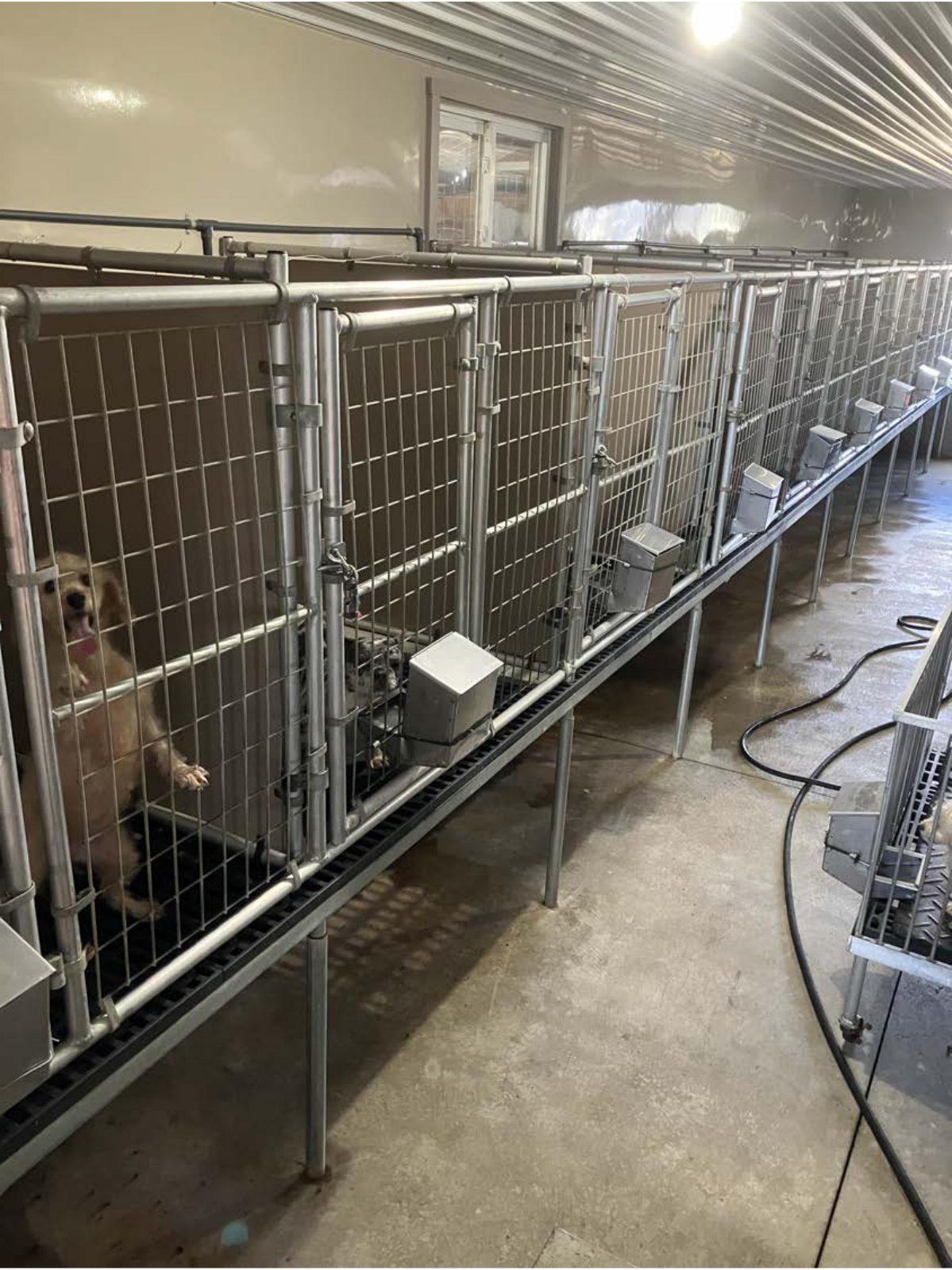
February 4, 2025 — Ohio inspection (report PDF)
Yes. Inspectors recorded 20 problems across 23 visits, 4 of them repeats of earlier ones. Each one is quoted in full above, in the inspector's own words.
At the most recent inspection on file, February 13, 2025, inspectors counted 42 dogs (22 adults · 20 puppies). The count is taken by the inspector on the day, so it moves with litters and sales.
The records name Bernese Mountain Dog, French Bulldog, Poodle. Breeds come from the inspection paperwork, so a kennel may keep others that were never written down.
This profile includes public USDA and Ohio inspection and licensing records. Notes describe conditions documented on the inspection dates shown.
If information is inaccurate or out of date, please let us know.
Submit a correctionWe collect and organize public records from government sources, including USDA APHIS and state departments of agriculture. We do not conduct our own inspections.
Learn how our data works →They summarize public licensing and inspection records from the agencies shown.
Records are updated as new public documents are collected and reviewed.
No. Pawthenticity organizes public records and does not provide endorsements.
Pawthenticity is a nonprofit organization. Your support helps us make public records more accessible.
Real records. Brighter tomorrows.